

What the military jacket revival says about menswear
Does the military jacket revival read as more than a cyclical resurface? From the SS26 runways to Playboi Carti, here’s why the jacket that’s hung from the shoulders of music history’s most enigmatic frontmen speaks volumes about the status of modern menswear.
Jack White was prominent in a magnetic lineup of front-rowers at the Ann Demeulemeester Spring 2026 show this October. Not least because The White Stripes frontman’s daughter, Scarlett, took to the runway flanked by a collection akin to rummaging through (an impeccable) trunk belonging to The Lost Boys. It’s more notable that White is a symbol of the Victorian-vampire-rockstar blend that Stefano Gallici, the brand’s creative director, has been perfecting since taking the helm of the legacy Antwerp label last year. Similarly, in January, Gallici outfitted The Horrors in Ann Demeulemeester for the band’s More than Life music video (the same band who have announced their first Australian tour in 14 years).
The significance? The Horrors and The White Stripes, at their initial peak, epitomized the rickety, wrongish, indie-rock vagabond, a figure that exploded in response to the bubble-gum pop, nu-metal, and boy band domination of the early aughts.
Is this why Gallici zeroed in on the military jacket this season? Seven of them, with the sharply rendered crop and brutish boxiness sure to raise an eyebrow of anyone who flopped a fringe forward in a sticky-floored venue in the mid-2000s. A similar wink emerged at Sean McGirr’s SS26 McQueen show; the officer jacket topped Lee-coded bumster-rise jeans and shorts, while the outerwear at Dries Van Noten by Julien Klausner would’ve looked at home on a Sgt. Pepper’s vinyl sleeve.
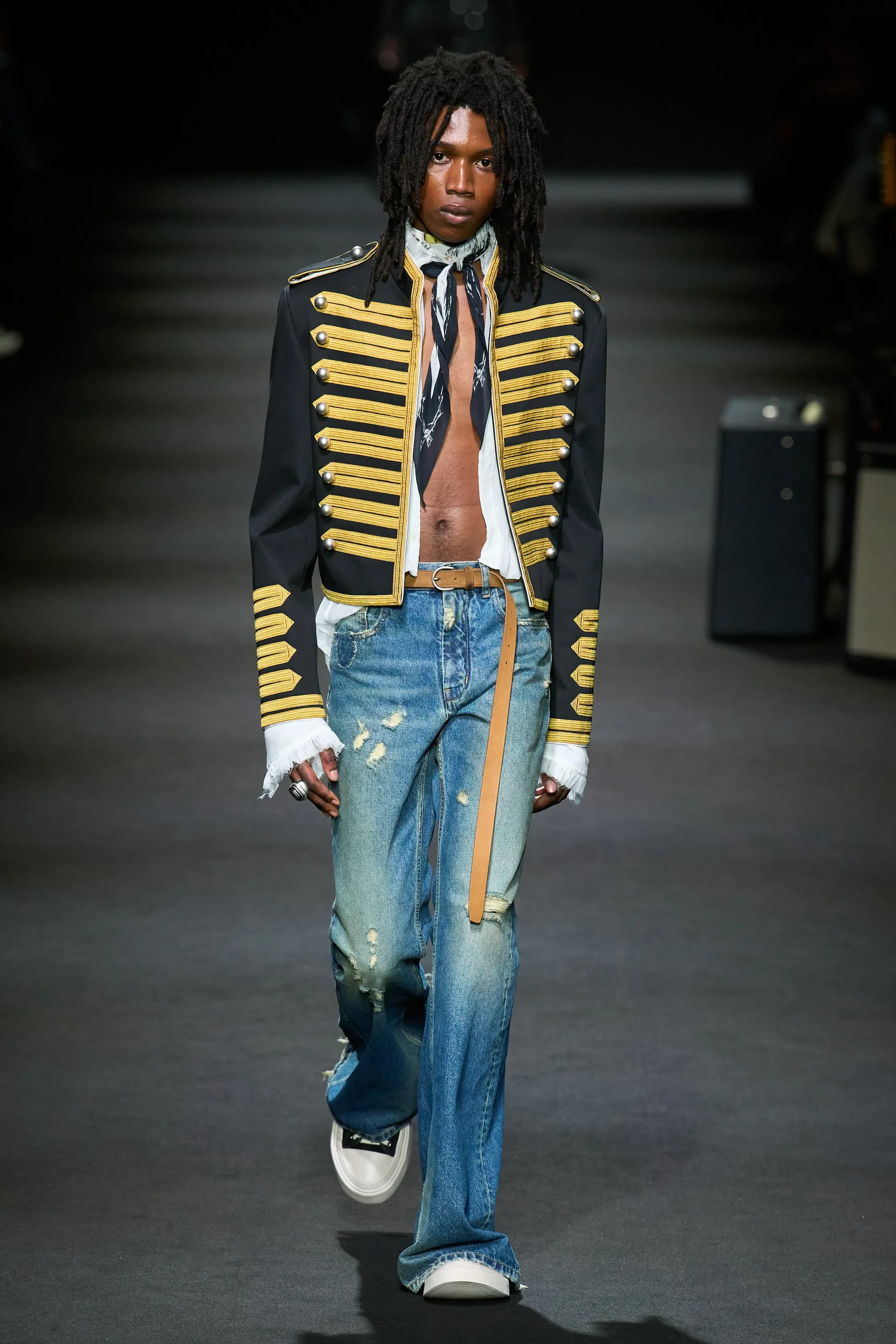
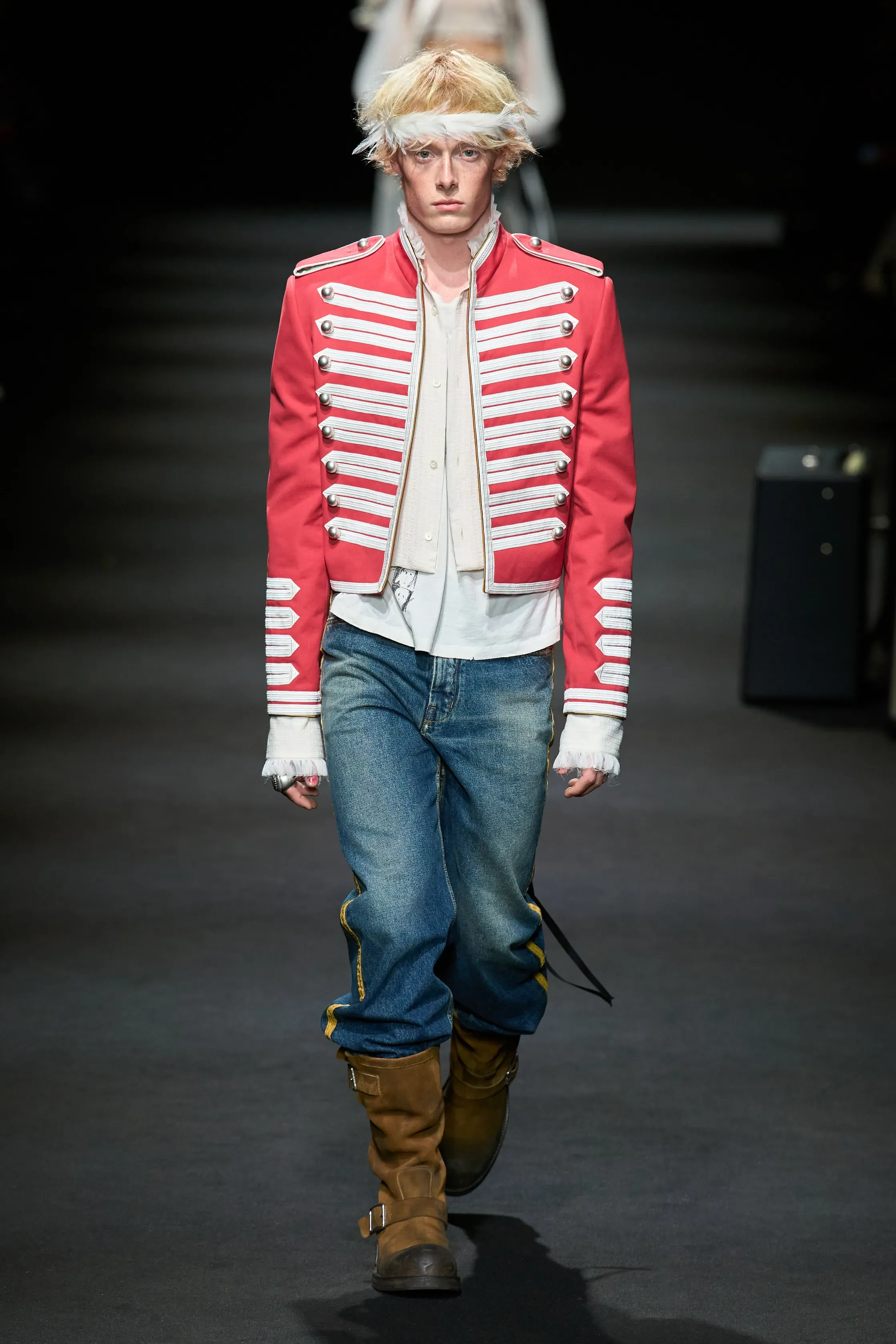
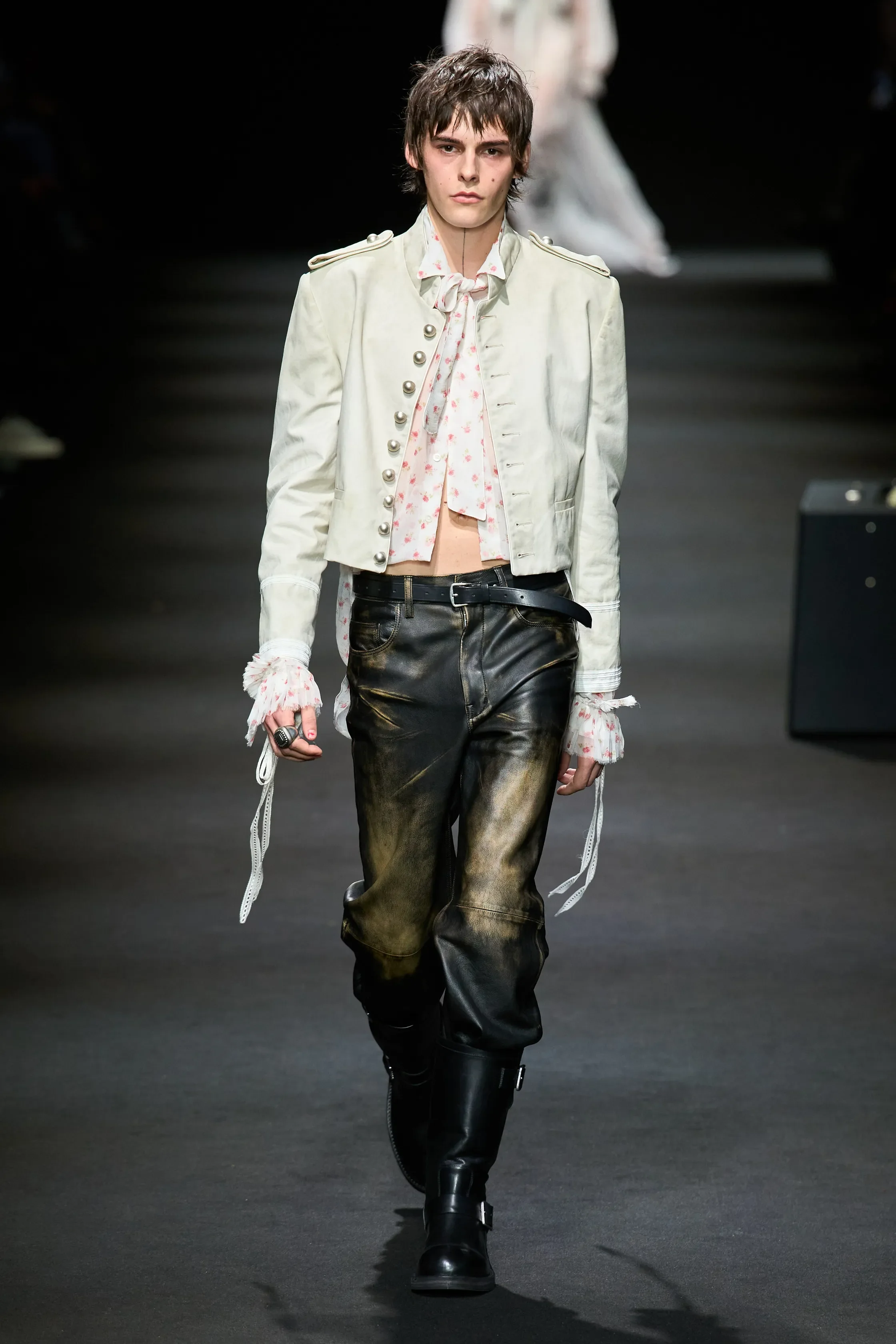
Yes, the military, officer, drummer-boy, hussar, Nutcracker, or Napoleon jacket – in all its peak-shouldered, frog-buttoned, chevronned, and unnervingly regal glory – is rearing its rockstar head slowly, but surely. And, it appears, that rather than lean on nostalgia-heavy connotations, there’s instead a want to crystallize that feeling of the shifting of the gears, to anticipate, or forge the rumblings of something different, something else.
It’s easy to say a clothing item is having a comeback, but for one so laced in the subversion of its original purpose, the piece has always been more than just a jacket. It’s a signifier of anarchy, equally as evocative now in a society riddled with sameness, one falling for conservative ideals disguised as quiet luxury. And, its interest is skyrocketing once more. The search term ‘military jackets’ peaked in popularity in Google searches in September 2025, with search term volume having risen 97% over the past quarter.
Playboi Carti’s New York gig on his Anti Antagonist 2.0 tour saw the rapper don the style that recalled Jimi Hendrix’s iconic hussar jacket, and looked remarkably as though it might have been plucked from Hedi Slimane’s Saint Laurent AW16 collection (...coincidentally sold out on Grailed). It's no surprise that Carti would find the military jacket appealing; his personal code of rage-rape plays into an eccentric, vampiric, even gothic wardrobe – one that is highly influential to his fans. A New York Times review described the crowd as “easily 90% young men…outfitted in black, many of them free and glimmering with sweat.”
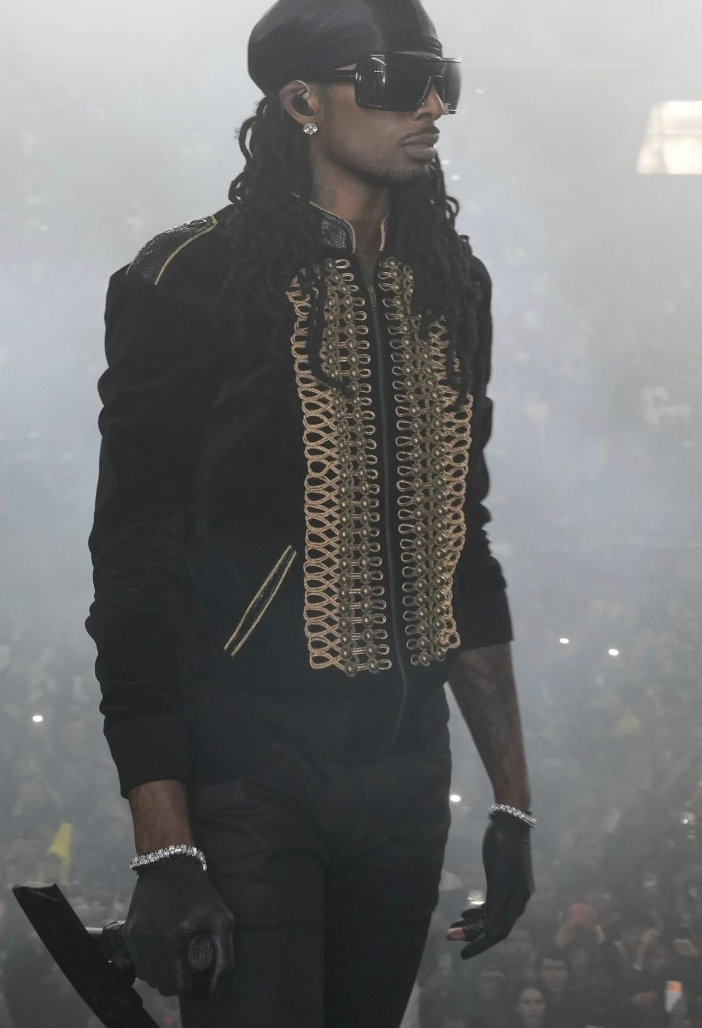
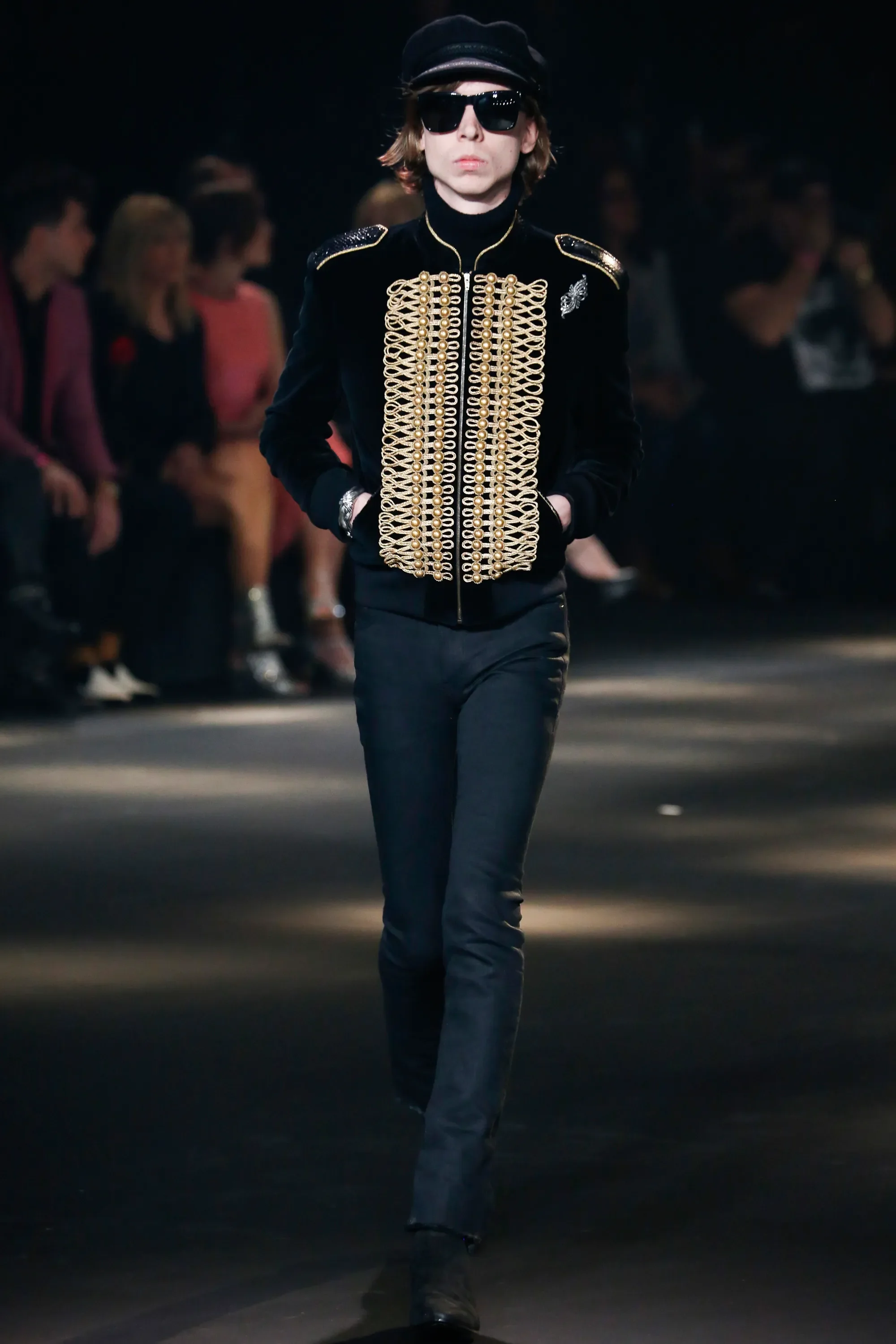
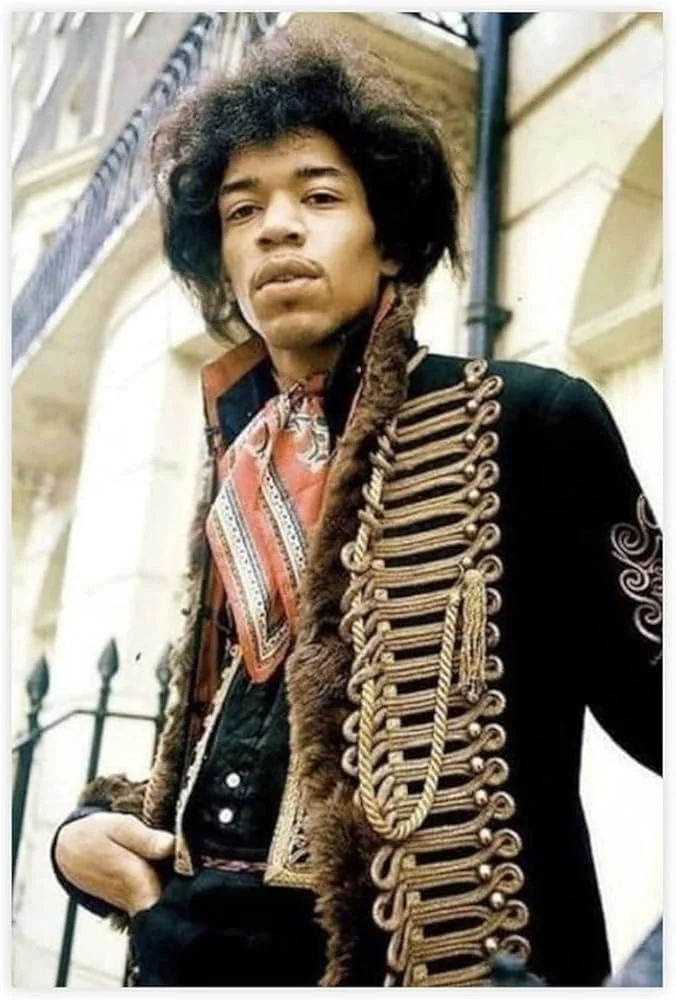
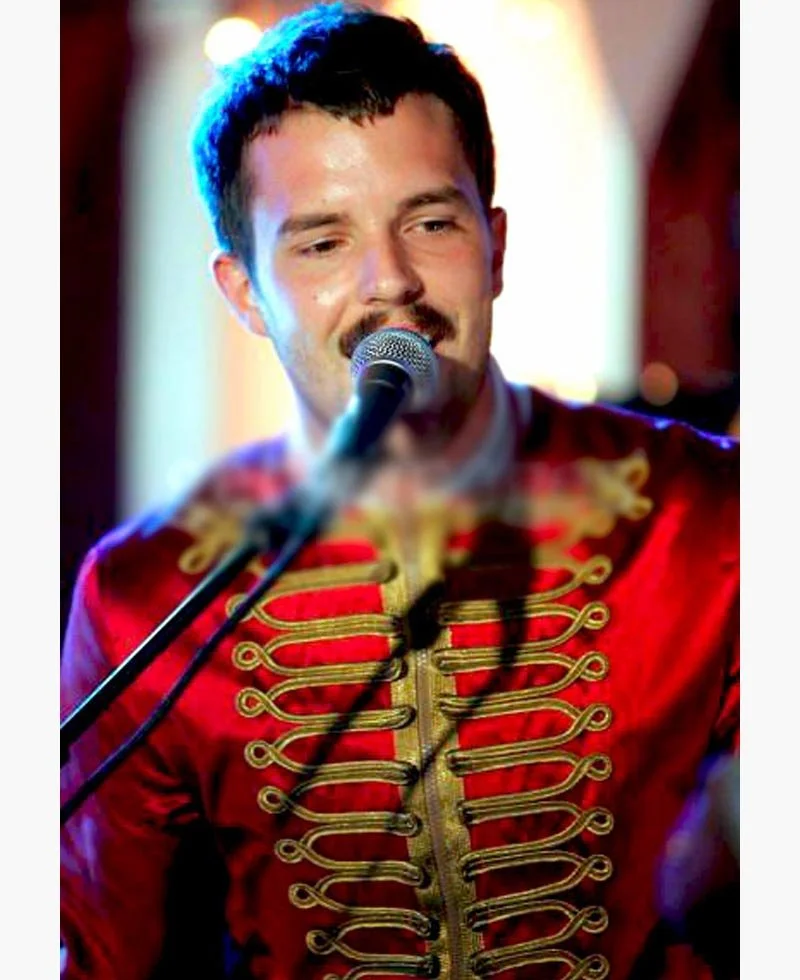
As for Slimane, the enfant terrible of spray-on skinny jeans and super slim-line suits, with an obsession for punk bands and Los Angeles’ grainy nightlife, Saint Laurent wasn’t his first foray into the musician's staple. Cast your mind back, circa 2007, where the Napoleon jacket from his Dior Homme Spring 2006 collection landed on everyone from Brandon Flowers of The Killers – whose penchant for sergeant-style jackets lasted years – to Thom Yorke, and Stronger-era Kanye West. The jacket itself was inspired by the ramshackle garage rock-stylings of Pete Doherty and the Libertines, icons of rockstar debauchery, and probably had something to do with Julian Casablancas of The Strokes performing more than a few shows at the time in his signature Marine Corps dress blues coat.
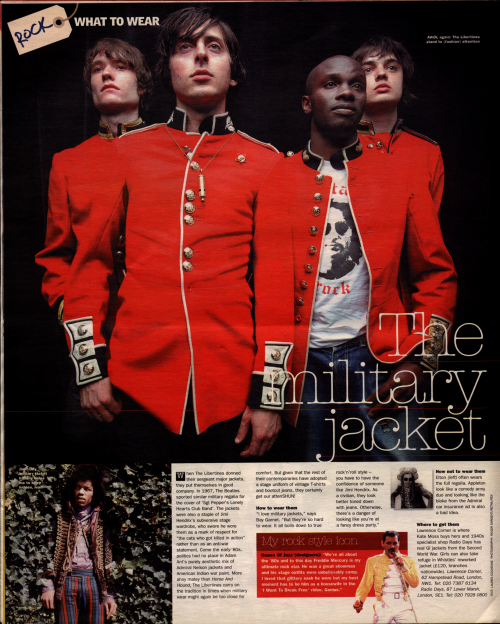
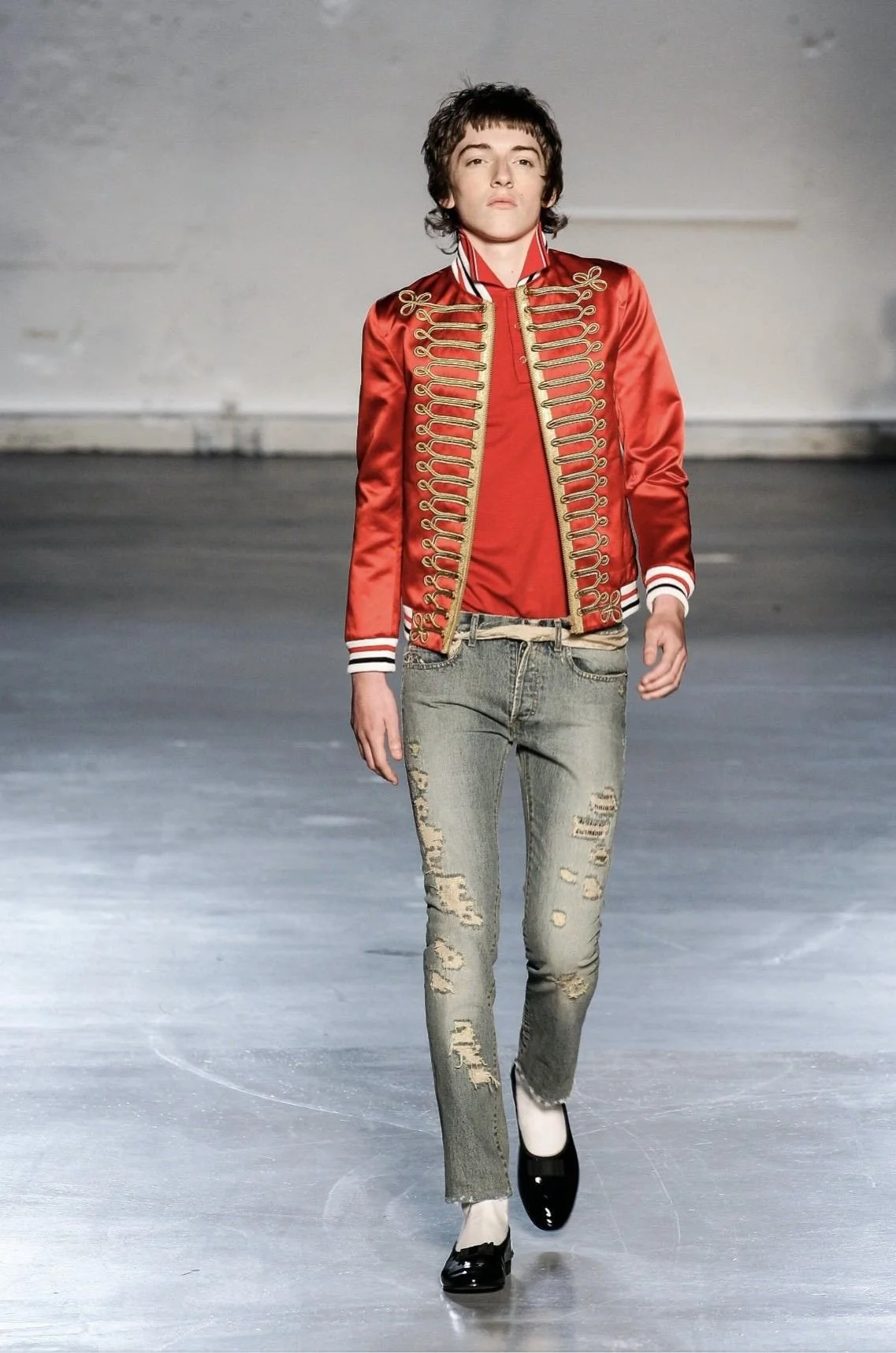
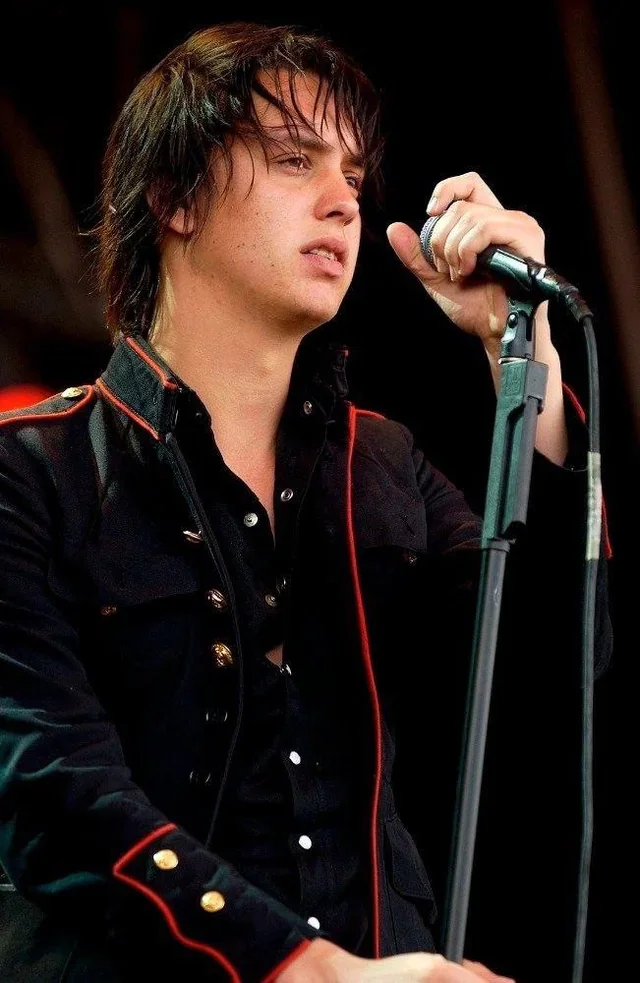
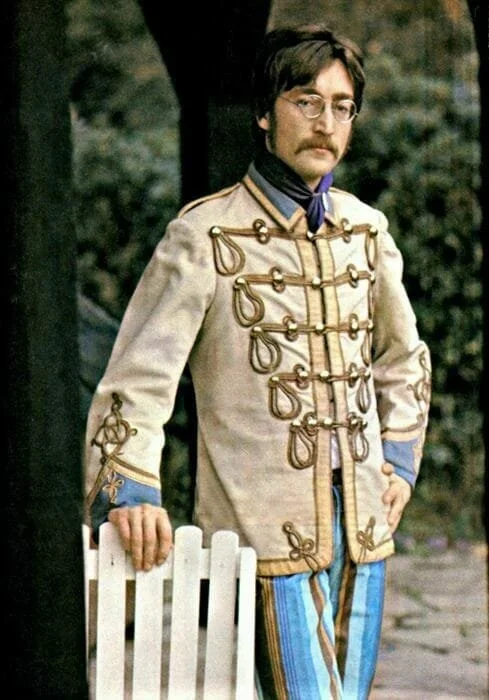
The crux of the jacket is that it's part of a uniform; it’s historically a pillar of masculinity, stoicism, and violence. But when it’s worn by activists, hedonists, and poets, it becomes punk; it's irreverent, and all original meaning is lost. Its most famous male wearers haven’t ever been overtly masculine, but effeminate and androgynous, led by their ideals. John Lennon wore a World War I-era military band tunic in LIFE magazine in late 1966, by way of introducing The Beatles' polarizing new look ahead of recording Sgt. Pepper's Lonely Hearts Club Band. In The Beatles Anthology, Lennon says, "Kids were already wearing army jackets on the King's Road; all we did was make them famous...we were the ones who were chosen to represent what was going on on the street..."
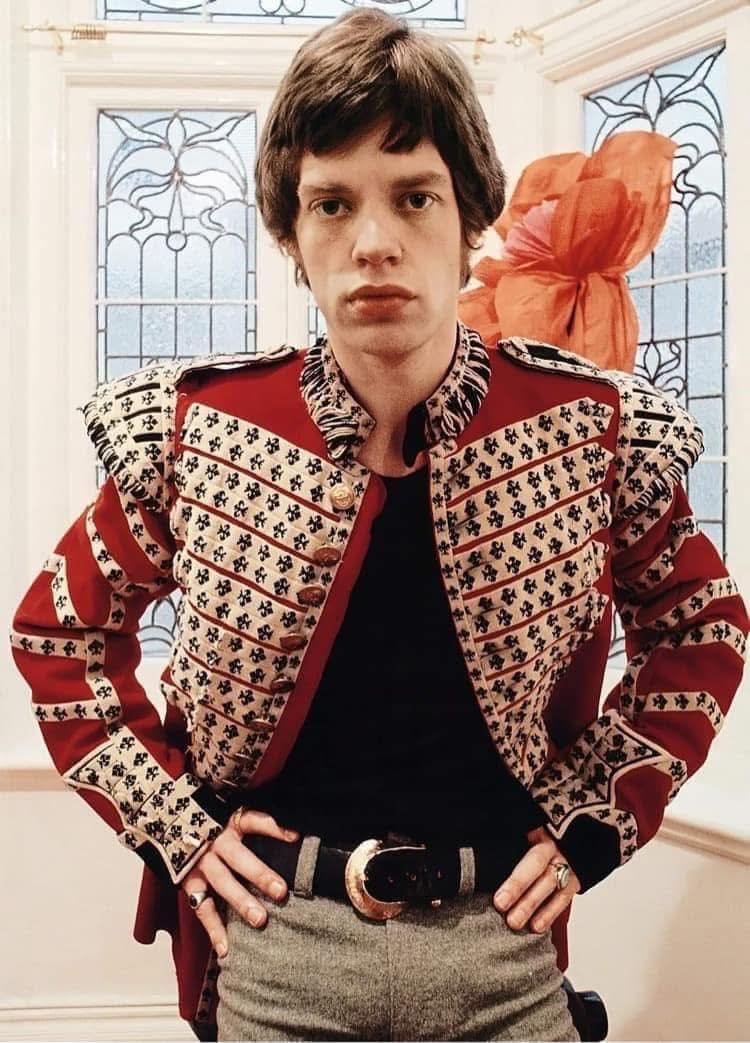
Like the Oasis working-class Manchester uniform, the subcultures start on the street, a voice for the fringes. There’s a certain language and a certain dress code. Uniforms, in their own unique contexts, allow identity, and identity allows freedom, and that’s what menswear seems to be looking for: a new uniform – the freedom to experience, express, and entertain through clothing that just feels right for right now.
Whether that’s the military jacket in its next iteration, it doesn’t really matter. It’s not for everyone.